

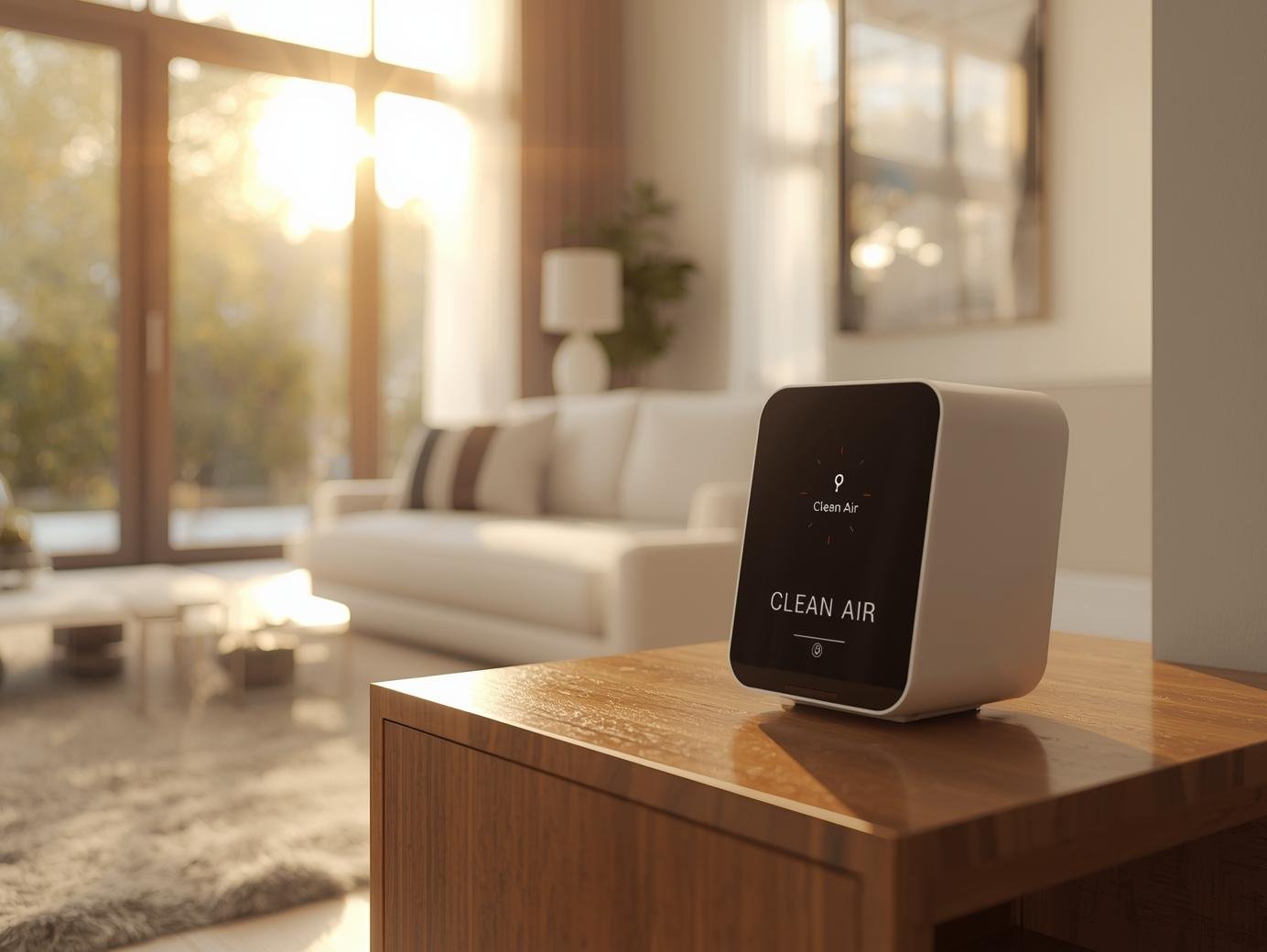
Indoor Air Quality Regulations 2026: How EPA Guidelines Are Reshaping Home Humidifier Standards
Introduction
Home air quality has moved from optional wellness trend to regulated necessity. While the EPA hasn’t issued specific humidifier mandates in 2026, the agency’s Indoor Air Quality Regulations framework—including strengthened PM2.5 standards, updated ventilation guidance, and respiratory virus prevention protocols—is fundamentally changing how homeowners must approach moisture management. Combined with evolving UL safety standards and new HVAC efficiency requirements taking effect this year, the regulatory landscape demands smarter, cleaner humidification systems.
For homeowners, this matters because poorly maintained or improperly selected humidifiers can violate emerging Indoor Air Quality Regulations by introducing mold spores, bacteria, and mineral dust into living spaces. The EPA’s tightened PM2.5 standard—reduced from 12 to 9 micrograms per cubic meter—means that humidifiers emitting particulate matter now contribute to regulatory non-compliance in your own home. With 2026 HVAC standards emphasizing whole-home air quality integration, your humidifier choice has never been more consequential.
Table of Contents
The Regulatory Shift: What Changed in the IAQ Landscape
EPA’s Updated Indoor Air Quality Guidance
In November 2024, the EPA released comprehensive updated guidance on indoor air quality strategies for preventing respiratory virus spread in homes, schools, and commercial buildings. The guidance emphasizes ventilation improvements, layered prevention approaches combining filtration and air cleaning, and specific recommendations for managing humidity levels. While not legally binding for residential properties, these guidelines establish the standard of care that informs state-level Indoor Air Quality Regulations and industry best practices.
The CDC-aligned recommendations highlight that improper humidity control—whether too high or too low—compromises respiratory health and increases virus transmission risk. This represents a fundamental shift from viewing humidifiers as comfort devices to recognizing them as critical components of health-focused environmental control systems.
Strengthened PM2.5 Standards Impact Humidifier Selection
The EPA’s February 2023 decision to strengthen the National Ambient Air Quality Standard for fine particulate matter from 12 to 9 µg/m³ continues to reverberate through 2026. This regulation directly affects humidifier users because traditional cool mist and ultrasonic humidifiers release mineral dust particles when filled with hard water—particles that fall squarely within the PM2.5 category.
The World Health Organization’s even stricter guideline of 5 µg/m³ annual average increasingly informs corporate and residential Indoor Air Quality Regulations, creating pressure for humidifiers that don’t contribute to particulate pollution. Consumer Reports’ 2026 testing now explicitly evaluates humidifier performance with hard water to assess mineral dust emissions—a direct response to these tightened standards.
2026 HVAC Standards Integrate Humidity Management
The 2026 HVAC standards represent one of the industry’s most significant transitions in decades, emphasizing energy efficiency, environmental impact, and integrated air quality management. Modern HVAC systems now treat humidity as a coordinated element alongside temperature, ventilation, and filtration. For homeowners, this means standalone humidifiers must either integrate with whole-home systems or meet higher performance standards to avoid undermining HVAC efficiency gains.
The regulatory focus on system integration reflects understanding that piecemeal approaches to indoor air quality create conflicts—oversaturated air increases mold risk, while dry air compromises respiratory defense mechanisms. The 2026 framework pushes toward holistic solutions where humidifiers communicate with thermostats and air quality monitors.
Understanding Current Indoor Air Quality Regulations for Homes
Federal Guidelines vs. Enforceable Standards
The EPA provides recommended guidelines rather than legally enforceable residential Indoor Air Quality Regulations for most pollutants. Current EPA thresholds include radon below 4 pCi/L, carbon monoxide below 9 ppm for eight-hour exposure, particulate matter (PM2.5) at 12 µg/m³ (federal ambient standard) or 9 µg/m³ (updated NAAQS), and formaldehyde at 100 µg/m³ or less.
For humidity specifically, the EPA recommends maintaining relative humidity between 30-50% to minimize mold growth, dust mites, and respiratory irritation. While not legally binding for homeowners, these guidelines inform insurance requirements, property management standards, and increasingly, smart home system default settings.
State-Level Regulations Tightening Standards
States are implementing stricter Indoor Air Quality Regulations that exceed federal minimums. Washington’s Building Code Council now requires MERV 13 filters in most occupancies and mandates filtering both indoor and outdoor air, effective July 2023. These state requirements increasingly reference EPA guidelines as baseline standards, creating de facto regulatory pressure even in jurisdictions without specific humidifier rules.
California and other states pursuing aggressive climate and health policies are expected to codify indoor air quality monitoring requirements for rental properties and new construction throughout 2026. These developments position humidifier selection as a compliance decision, not merely a comfort preference.
UL Safety Standards for Humidifiers
UL 998 and CSA C22.2 No. 104 establish the safety standards for humidifiers rated 600V or less in residential and commercial settings. The most recent updates include requirements for smart-enabled humidifiers, revised conductor sizing, and updated grounding symbols. These standards cover humidifiers of all types: centrifugal atomizing, evaporative-media, water-injection, and steam.
Compliance with UL 998 is mandatory for retail sale in North America, making it the practical regulatory floor for humidifier safety. The 2017 supplement addressing smart-enabled humidifiers reflects the industry shift toward IoT-connected devices that integrate with whole-home air quality systems.
Expert Analysis: What These Regulations Mean for Your Home
The Shift Toward Evaporative and Hybrid Systems
Evaporative humidifiers are experiencing resurgence due to regulatory pressures around particulate emissions. Unlike ultrasonic models that aerosolize minerals from water, evaporative systems use wicking filters that trap impurities while releasing clean moisture. Testing shows evaporative models naturally balance humidity without over-saturation risk, aligning perfectly with EPA guidelines recommending 30-50% relative humidity.
Consumer Reports’ 2026 top-rated humidifier—the Dreo HM524S—earned marks specifically for performance with hard water, indicating manufacturers are prioritizing designs that don’t generate PM2.5 pollution. For homeowners navigating Indoor Air Quality Regulations, evaporative technology offers the lowest regulatory risk profile.
Hybrid models combining evaporative humidification with HEPA filtration represent the cutting edge of compliance-focused design. These systems simultaneously add moisture and remove particulates, directly addressing the EPA’s dual concerns about humidity management and PM2.5 reduction.
Energy Efficiency Intersects With Air Quality
The 2026 emphasis on HVAC efficiency creates unexpected connections to Indoor Air Quality Regulations. Energy-efficient humidifiers like the Blueair H35i, which consumes only 6 watts at maximum output, reduce the operational cost of maintaining compliant humidity levels. This matters because homeowners are more likely to run humidifiers consistently when energy costs are negligible.
Smart humidifiers with built-in humidistats prevent over-humidification that leads to mold growth—a violation of EPA mold guidance and a common cause of indoor air quality complaints. The regulatory environment increasingly favors automated systems that maintain optimal ranges without manual intervention.
For detailed comparisons of energy-efficient, EPA-guideline-compliant humidifiers across all price ranges, visit our [Product Reviews page] where we test devices specifically for hard water performance and particulate emissions.
The Maintenance Imperative Under Stricter Standards
EPA guidance explicitly warns that poorly maintained humidifiers become sources of biological contamination. Under emerging Indoor Air Quality Regulations frameworks, homeowners bear responsibility for ensuring devices don’t introduce pathogens into living spaces. This shifts humidifiers from “set and forget” appliances to managed environmental systems requiring regular cleaning protocols.
The practical impact: models with top-fill designs, antimicrobial tank coatings, and dishwasher-safe components align better with regulatory expectations because they facilitate compliance with maintenance best practices. Devices that are difficult to clean effectively become liability risks in an environment where indoor air quality is increasingly monitored and reported.
Commercial Implications Point to Residential Trends
Business-focused Indoor Air Quality Regulations for 2025 require continuous monitoring with 100 ppb thresholds and visible results for workers within one year. While residential properties don’t yet face these requirements, the trajectory is clear: transparency and accountability around indoor air quality are expanding. Smart humidifiers with app-based monitoring and automated compliance reporting position homeowners ahead of likely future residential requirements.
Key Takeaways: What You Need to Know
- The EPA’s updated Indoor Air Quality Regulations framework emphasizes ventilation, humidity control between 30-50%, and respiratory virus prevention—fundamentally changing humidifier selection criteria
- Strengthened PM2.5 standards (9 µg/m³) mean ultrasonic humidifiers used with hard water can violate air quality guidelines by releasing mineral dust particulates
- 2026 HVAC efficiency standards integrate humidity management into whole-home air quality systems, requiring humidifiers that work with rather than against heating and cooling equipment
- Evaporative humidifiers with wicking filters produce the lowest particulate emissions, aligning best with current Indoor Air Quality Regulations
- Smart humidifiers with built-in humidistats, app monitoring, and automated controls help maintain EPA-recommended humidity ranges while preventing mold-promoting over-humidification
- Regular maintenance is no longer optional—EPA guidance makes clear that dirty humidifiers violate indoor air quality standards by introducing biological contaminants
Choosing Compliance in 2026
Indoor Air Quality Regulations have transformed humidifiers from simple comfort devices into regulated environmental systems with measurable health and compliance implications. The convergence of EPA guidance updates, strengthened PM2.5 standards, and 2026 HVAC requirements creates a clear directive: homeowners must prioritize clean, efficient, maintainable humidification that integrates with whole-home air quality strategies.
The regulatory trajectory points unmistakably toward greater transparency, monitoring, and accountability for residential indoor air quality. Investing in compliant humidification technology today—evaporative or hybrid systems with smart controls and easy maintenance—positions your home ahead of likely future requirements while immediately improving respiratory health and comfort.
The question isn’t whether indoor air quality will become more heavily regulated, but how quickly residential standards will catch up to commercial requirements already taking effect.
How are you managing humidity levels in your home? Have you switched to cleaner humidification technologies? Share your indoor air quality strategy in the comments below.
Ready to upgrade every corner of your home? From cozy seating like this Furlide chair to high-tech kitchen gadgets, we’ve got you covered. Check out our Full Library of Home Product Reviews to discover more expert-tested gear for your lifestyle.
[…] Indoor Air Quality Regulations 2026: EPA and Humidifier Guide […]
[…] Indoor Air Quality Regulations 2026: EPA and Humidifier Guide […]
[…] Indoor Air Quality Regulations 2026: EPA and Humidifier Guide […]