

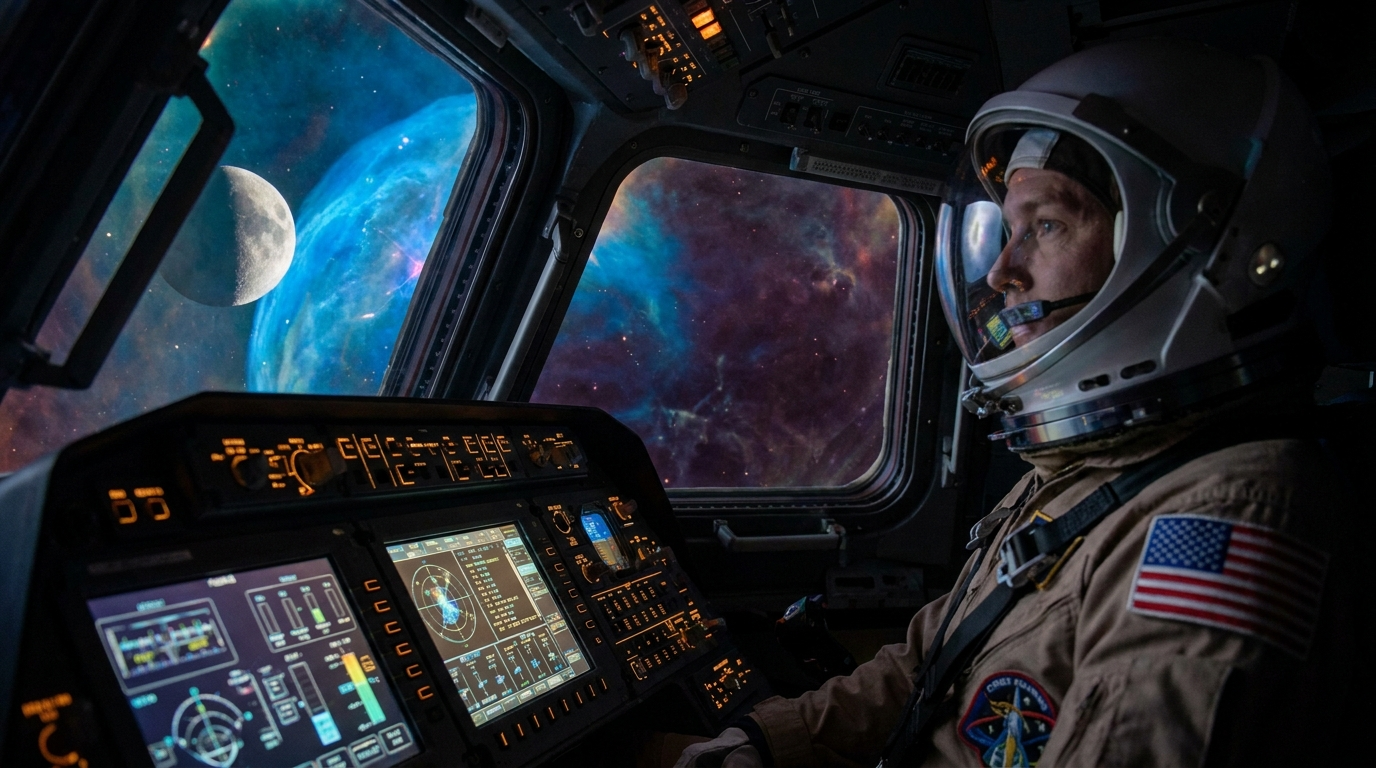
Artemis II astronaut Victor Glover is carving a historic path as the pilot of NASA’s Orion spacecraft in the agency’s first crewed lunar mission in over 50 years. Glover’s role marks a significant milestone not just for the Artemis II mission but for the evolution of human spaceflight as it prepares to propel a new generation toward the Moon.
The Artemis II mission, slated as the first crewed flight in NASA’s Artemis program, aims to conduct a lunar flyby while rigorously testing the Orion spacecraft’s systems in human operation mode. Unlike earlier automated missions, this flight will require intricate manual piloting skills, and Victor Glover is at the forefront of this demanding challenge. As a seasoned fighter pilot and astronaut, he brings a unique blend of technical expertise and composure under pressure.
Orion, the spacecraft designed to carry astronauts deeper into space than ever before, boasts a blend of state-of-the-art navigation and control systems that demand intense astronaut interaction during critical mission phases. Manual control during Orion’s journey is not merely about steering; it involves operating complex thrusters, managing life support systems, and adapting to unexpected contingencies, all while orbiting the Moon at tens of thousands of miles per hour. The challenge echoes some aspects of Apollo-era piloting but incorporates 21st-century technology that introduces new layers of complexity.
Glover’s background as an accomplished naval aviator and spacewalker underpins his capacity to manage these complex spacecraft dynamics. His biography on NASA’s site details a career marked by precision and resilience, qualities indispensable for piloting Orion amid the intricacies of lunar orbit operations. “This mission is a pivotal test of human and machine coordination,” Glover explains, highlighting the demanding nature of balancing automated systems and manual override in spaceflight.
The Artemis II mission also serves as a technological proving ground, verifying Orion’s readiness for the more ambitious Artemis III lunar landing scheduled for the near future. Success here will validate new human-rating systems and improved spacecraft interfaces designed to enhance astronaut situational awareness and vehicle control. This mission encapsulates a leap forward from Apollo’s analog control panels to touchscreen interfaces complemented by AI-assistive technologies, underscoring how space exploration is evolving with digital innovation.
Beyond the cockpit challenges, Artemis II presents a powerful symbolic narrative. Glover represents a new era of astronauts—diverse, experienced, and deeply connected to the public imagination. NASA’s choice resonates with a broader cultural moment where representation and inspiration aim to engage a global audience, especially youth eager to see themselves in space careers. In one of his public interviews, Glover remarked, “We work for them too,” emphasizing that the mission is for everyone.
This cultural resonance is amplified by comparisons to past lunar pioneers. While the Apollo astronauts relied heavily on manual controls and rudimentary onboard computing, Glover pilots an Orion spacecraft equipped with advanced avionics that require both automation oversight and manual finesse. This hybrid control scheme reflects decades of lessons learned and technological advances, demanding a new kind of astronaut proficiency.
The Artemis II crew comprises a diverse team whose combined expertise will push the limits of lunar orbit science and spacecraft operations. Detailed insights into the mission’s daily milestones, such as lunar orbit preparations and flyby objectives, can be explored through specialized coverage like the comprehensive report on Artemis II lunar flyby day 6 milestone. Such sources provide context on the mission’s stepwise progress and operational intricacies.
These reports complement analysis of the moon flyby and orbit preparations featured in coverage at Artemis II moon flyby lunar orbit prep, which delve deeper into the technical steps necessary for ensuring safety and mission success during critical orbital maneuvers. This technical depth gives readers a clearer picture of the real-time challenges Glover faces piloting Orion in a live space environment.
Another dimension to Artemis II’s technology story involves the integration of advanced onboard systems. These include AI-enhanced diagnostics and environmental controls that interact seamlessly with human commands. Such sophistication connects to broader trends in space mission design, where human and artificial intelligence cooperation is essential for long-duration missions. Samsung’s innovations in AI appliances, while terrestrial, exemplify the growing ubiquity of AI assistive technology, which parallels the challenges astronauts manage onboard Orion, as explained in reviews of Samsung Bespoke AI appliances. This intersection of AI and human skill is at the heart of Artemis II’s technical challenge.
As Artemis II continues to unfold, the implications extend far beyond the immediate mission objectives. Glover’s hands-on experience piloting Orion informs future NASA astronaut training, spacecraft design improvements, and mission protocols that will influence lunar and deep space exploration. The mission also sets the stage for international cooperation and commercial partnerships critical to sustained lunar presence and Mars ambitions.
Victor Glover’s journey in the Orion spacecraft embodies the next chapter in human space exploration—melding technical mastery, human endurance, and visionary goals. His role in Artemis II highlights not only the complexities of piloting a modern spacecraft but also the broader aspirations of returning humans to the Moon with renewed purpose, diversity, and technological prowess.
[…] Artemis II: Victor Glover as Orion Spacecraft Pilot […]