

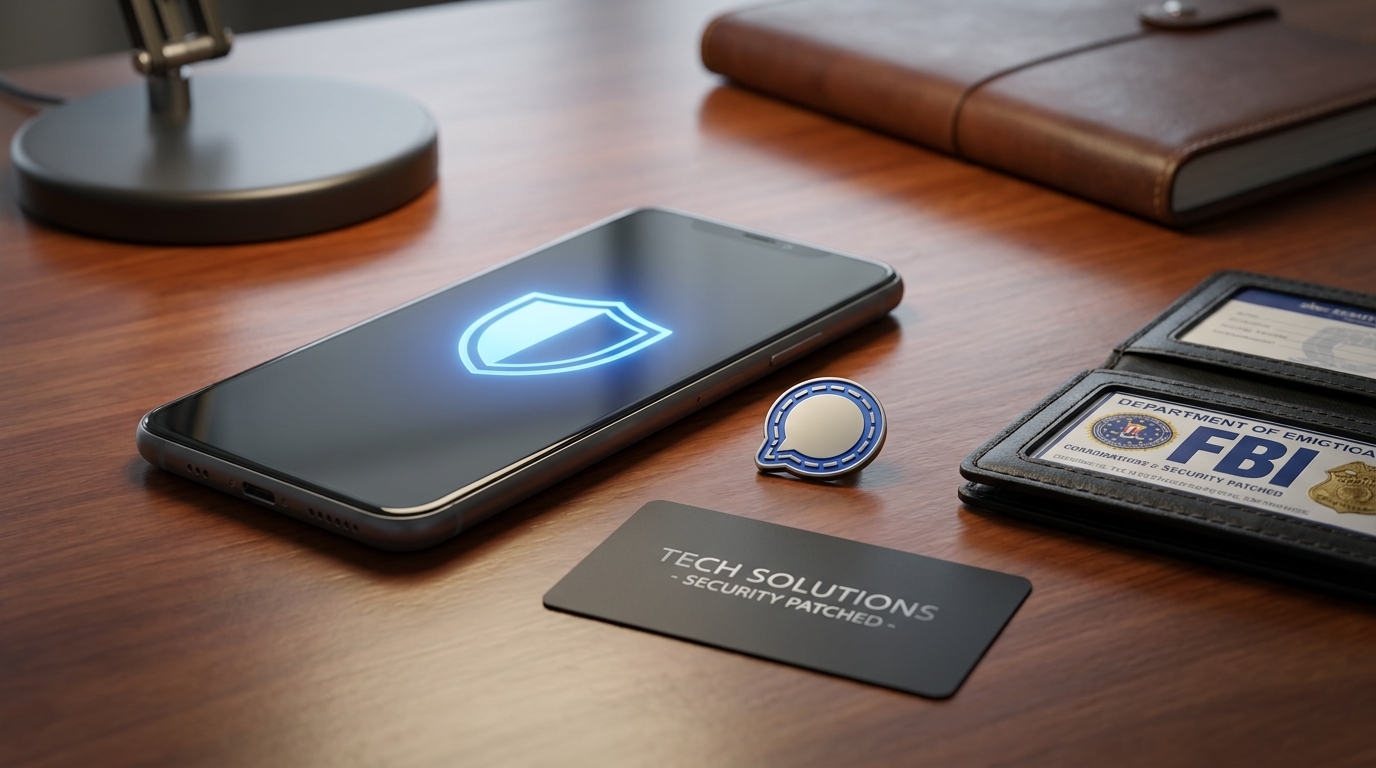
Apple has urgently addressed a critical iPhone security hole that allowed recovery of supposedly deleted messages within the Signal app, a breach that highlights significant privacy concerns for users of secure messaging platforms. The vulnerability, which went unnoticed until its exploitation by the FBI, raised alarms due to its potential to expose sensitive conversations despite Signal’s strong encryption and deletion protocols.
The flaw enabled forensic recovery of Signal messages that users had deleted, directly undermining the core privacy promise of the app. Investigations revealed the issue stemmed from how notifications for Signal messages were cached in iOS, retaining message content even after deletion from the app itself. This flaw was catalogued under CVE-2026-28950 and exposed a gap in Apple’s handling of notification data, a vector that the FBI reportedly leveraged for lawful surveillance.
Apple swiftly responded with the release of the iOS 26.4.2 security patch, which specifically addresses this iPhone security hole by modifying notification caching behaviors to prevent residual data storage on devices. The update is now available to all compatible iPhones and highly recommended for users seeking to secure their communications. Apple’s security advisory emphasizes the importance of installing this patch promptly, describing it as a high-severity threat with potential implications beyond Signal, possibly affecting other apps using similar notification methodologies.
This incident underscores ongoing challenges in mobile security, where even platforms designed with end-to-end encryption can be vulnerable due to underlying operating system behaviors. Signal developers have noted the issue, suggesting users adjust notification settings to disable previews as an interim privacy measure. Experts recommend that users maintain rigorous updating habits and review app permissions carefully to mitigate such risks.
The technical root of this iPhone security hole lies in the iPhone’s notification service, which temporarily stores message content to display previews on the lock screen and notification center. While intended to enhance user experience, this caching mechanism did not adequately clear data upon message deletion — a core flaw behind the iPhone security hole. The FBI’s reported exploitation leverages forensic tools to extract these cached notifications, revealing conversations that users assumed were erased.
Cybersecurity analysts view this iPhone security hole as a cautionary tale illustrating that OS-level design choices can compromise app-level security guarantees. “Apple’s quick patch demonstrates their commitment to privacy, but it also reveals how complex it is to safeguard user data in a multi-layered mobile environment,” says a digital privacy expert. This situation has renewed calls for more transparent security practices and enhanced collaboration between app developers and OS manufacturers to mitigate such systemic vulnerabilities linked to this iPhone security hole.
This iPhone security hole highlights how messaging apps vary widely in how they handle notifications and data retention, with competitors like WhatsApp and Telegram employing different approaches to notification caching. Signal’s strong encryption remains a benchmark in the industry; however, this iPhone security hole reveals that encryption alone is insufficient without equally robust OS-level privacy protections.
Beyond the patch, users should consider adjusting their Signal notification settings, such as disabling message previews, to reduce data exposure risks. Additionally, keeping abreast of the latest security updates and trustworthy information about app privacy practices is essential. Articles explaining the technical aspects of this flaw and guidance on securing iPhones are available, including smart home security trends for 2026, which situate mobile device privacy within broader connected ecosystem concerns.
Further insights into Apple’s ongoing improvements in security and user privacy can be found in discussions about the company’s updates before the Apple HomeKit February 10, 2026 deadline and rumors concerning the future of Apple’s smart home displays as part of its privacy-first hardware strategy, detailed in Apple smart home display rumors.
Industry reports detail how this vulnerability was reported and patched. For example, ZDNet explains how the FBI utilized this iPhone security hole, shedding light on real-world exploitation scenarios. The Hacker News covers the technical underpinnings and patch details that help users understand the severity and mitigation steps. Additionally, Help Net Security provides an in-depth explanation of CVE-2026-28950 and its implications for Signal users and iOS privacy at large.
This episode serves as a practical reminder of the evolving nature of digital privacy threats and the necessity for users to adopt proactive security measures. Apple’s rapid response and patch deployment minimize widespread exploitation but do not entirely negate underlying risks if devices remain unpatched. It also highlights the importance of continual scrutiny of emerging privacy risks in mobile ecosystems where security cannot be taken for granted.
For users concerned about the recovery of deleted Signal messages, the recommended course of action consists of promptly installing the latest iOS 26.4.2 update, adjusting notification display settings within Signal, and staying informed about both software updates and privacy best practices. As the mobile security landscape advances, vigilance remains the best defense against breaches stemming from OS-level vulnerabilities.
The wider implications for Apple’s security strategy include reinforcing their commitment to patching vulnerabilities quickly and transparently while addressing systemic design choices that permit sensitive data leakage. This incident also contributes to ongoing discussions in cybersecurity circles about balancing usability features, like notification previews, with privacy demands.
In conclusion, while the iPhone security hole exposed a significant privacy risk concerning deleted Signal messages, Apple’s timely iOS security patch reflects a crucial step in safeguarding user data. Users must engage actively with such updates and privacy configurations to maintain control over their digital communications in an increasingly complex threat environment.